🌐 English summary is available at the bottom of this page.
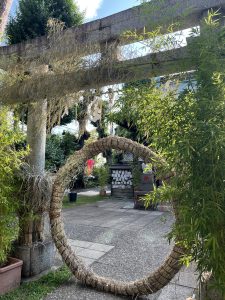
今日は松陰神社に行ってきました。松陰神社も夏越の大祓え。茅の輪があったのでくぐって、松陰神社でも人型を納めました。
昨日も近くの神社でやったのに、別のところでもやっていいの?当然OKです。日本の神様はそんな小さな存在ではないです。いろいろな神社に行っていろいろな神様とのご縁を頂けばいいのです。一神教ではなく多神教、八百万の神様がいらっしゃるのですから。
世田谷区の松陰神社には毎月1回通っています。とても清浄な空間で、良く掃き清められて美しい場所です。
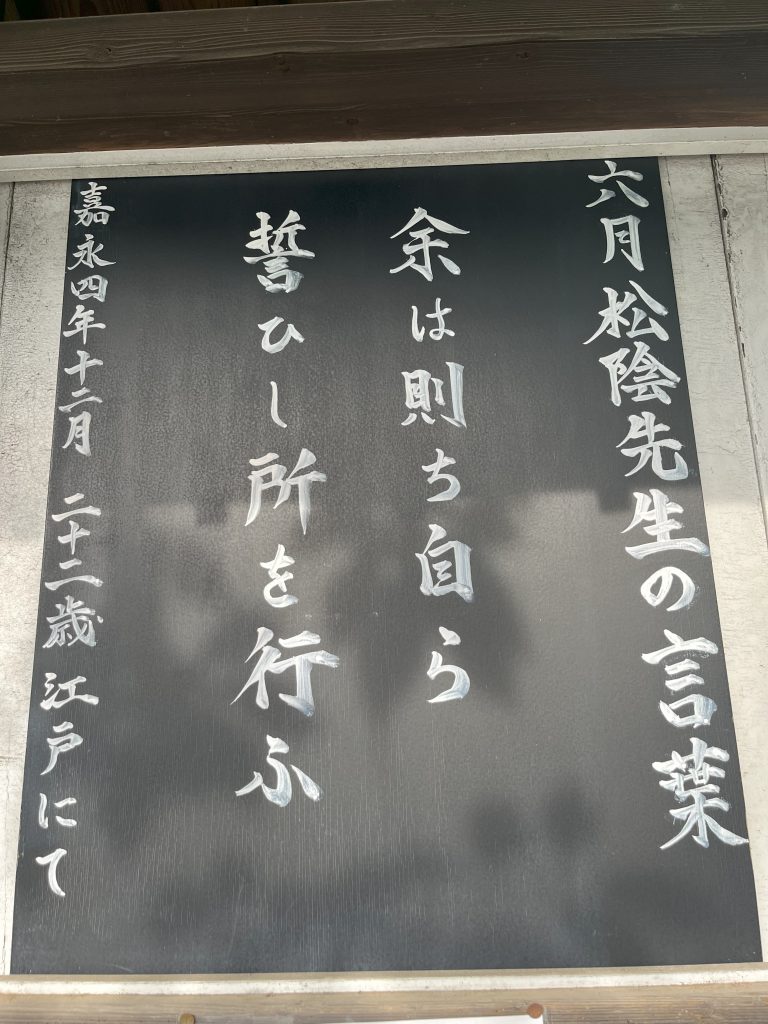
どうして毎月通うのか、それは掲示している松陰先生の言葉をチェックするためです。松陰先生の本はたくさん出ているので、わざわざこの掲示を見に行く必要もないのですが、なんとなく、それを言い訳にして通いたいのです。
吉田松陰先生は、幕末という時代にあって、志を持って日本の未来を見つめていた人物です。萩の片隅に開いた小さな私塾「松下村塾」からは、後に明治維新の中心を担う多くの人物が育ちました。高杉晋作、伊藤博文、山縣有朋など、彼の教えを受けた若者たちが、志を受け継ぎ、やがて時代を動かしていきます。
松陰先生自身は、わずか30歳で刑死という短い生涯を終えます。しかしその遺志は、弟子たちの中にしっかりと生きていました。彼らは命をかけて近代日本を築き上げ、結果として、日本はアジアの中で唯一、列強の植民地支配を免れた独立国となることができたのです。
これは、世界史的に見ても稀有な出来事です。
有色人種の国が、西洋列強の前に独立を守り、近代国家として歩み出すことができた背景には、間違いなく、松陰先生のような思想家・教育者の存在がありました。
松陰先生は行動も思想もぶっ飛んでます。頭のねじが一つ外れています。
でもそれはすべてどうすれば日本が良くなるのかという一点でぶっとんでいて、すがすがしいほど全く自分のことを考えていないのです。考えていなさすぎなのです。
その代表的な出来事が、あの「黒船密航未遂事件」です。
ペリーの黒船が浦賀にやって来たとき、松陰先生は何としてでもアメリカに渡って世界を見たいと、小舟で黒船に向かって漕ぎ出しました。命がけの行動です。日本の未来のために海外で学ぼうとしたのです。
もちろん、密航など許されるはずもなく、先生は捕らえられます。普通なら死罪になってもおかしくないことでした。
ペリーは松陰先生の行動に感銘を受け、「命を顧みず国のために動く若者がこの国にいる。日本は将来有望だ」といった趣旨の言葉を残したとも言われています。そして幕府に対しては、寛大な処分を望んだとも伝えられています。
実際には、先生はすぐに処刑されることはなく、長州へ送られ、幽閉という形になりました。
ペリーの働きかけが本当にあったのか、記録としてははっきりしませんが、そう語り継がれるだけの何かが、松陰先生の行動にはあったのだと思います。
この神社も、そんな松陰先生を慕う弟子たちが、維新後にその遺骨を探し出し、この地に改めて埋葬し、きちんとお祀りしたところから始まっています。単なる「偉人の神社」ではなく、想いを受け継いだ人たちの物語が、今も静かに続いている場所なのです。
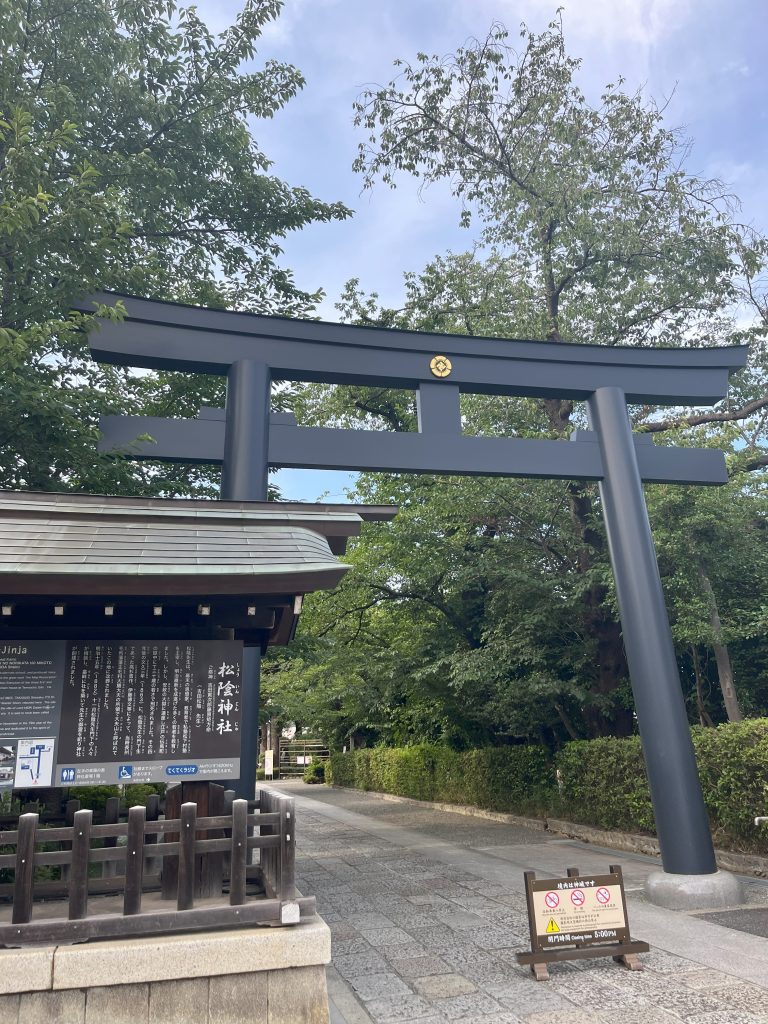
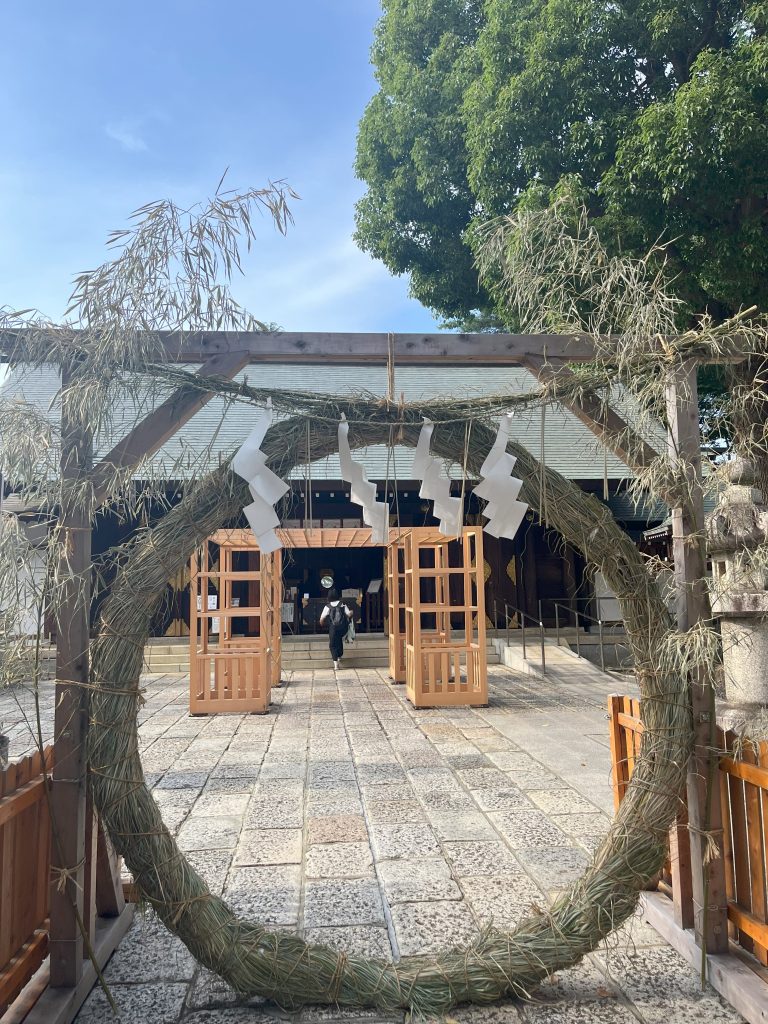
Today I visited Shoin Shrine in Setagaya, Tokyo.
There was a chinowa—a sacred ring of grass—set up for Nagoshi no Oharae, the summer purification ritual. I walked through it and offered a hitogata, a paper figure used to symbolically absorb impurities and be ritually purified.
I actually did the same thing at a nearby shrine yesterday. Is it okay to do it at multiple shrines? Of course it is.
Japanese deities are not small-minded.
In Japan, we don’t have just one god—we believe in Yaoyorozu no Kami, eight million gods. So visiting different shrines and connecting with various deities is a natural and welcome thing.
I visit Shoin Shrine once a month. It’s a beautiful, well-kept, and sacred space that always feels clear and refreshing.
Why do I go so often? Because I want to read the words of Shoin-sensei (Yoshida Shoin) posted near the shrine.
His writings are widely available in books, so there’s no real need to go just for that—but honestly, it gives me an excuse to return. Somehow, reading his words there feels different.
This phrase reflects Shoin’s unwavering commitment to carry out not what he promised to others, but what he vowed to himself.
It embodies a spirit of self-discipline and personal integrity—acting not out of obligation, but from inner conviction.
Yoshida Shoin was a thinker and educator who looked to Japan’s future in the final years of the Edo period.
In a small town called Hagi, he opened a tiny private school called Shōka Sonjuku, where he taught young men who would go on to lead the Meiji Restoration.
His students included figures like Takasugi Shinsaku, Ito Hirobumi, and Yamagata Aritomo—young men who inherited his ideals and helped reshape the nation.
Shoin-sensei himself died very young—executed at just 30 years old.
But his spirit lived on in his students. They gave their lives to build modern Japan, and thanks to their efforts, Japan became the only non-Western country in Asia that was not colonized by the Western powers.
That is an incredibly rare event in world history.
A nation of people of color was able to stay independent and enter the modern world on its own terms.
Behind that success were thinkers and teachers like Yoshida Shoin.
Shoin-sensei was, honestly, extreme—both in his ideas and in his actions. You might say he had a screw loose.
But every part of his intensity was focused on one thing: “How can I make Japan better?” He didn’t think about himself at all. In fact, he didn’t think about himself enough.
One of the most striking examples of this is the so-called Black Ship Stowaway Incident.
When Commodore Perry’s fleet arrived at Uraga, Shoin tried to sneak aboard one of the American ships.
He wanted to go to the United States to see the world firsthand and bring knowledge back for the future of Japan.
It was an act of desperation, determination—and danger. He took a small boat into the dark sea and approached the ship, hoping to be allowed on.
Of course, he was caught. Under normal circumstances, this kind of act could easily result in the death penalty.
But there’s a story—almost a legend—that Perry was so moved by Shoin’s courage and idealism that he spoke well of him, saying something like:
“A young man who risks his life for the good of his country—Japan has a bright future.”
It’s even said that Perry asked the shogunate to treat him with leniency.
In the end, Shoin was not executed immediately. He was sent back to Hagi and placed under house arrest.
We don’t know for certain whether Perry’s intervention truly happened. There’s no definitive written record.
But the fact that such a story has been told for generations shows how powerful Shoin’s actions were.
This shrine itself was founded after the Meiji Restoration, when Shoin’s students searched for his remains, reburied him with respect, and established this site in his honor.
So it’s not just a shrine for a famous person—it’s a place where the story of those who inherited his ideals still lives quietly on.
Notes for International Readers:
- Nagoshi no Oharae: A Shinto ritual held in June to cleanse impurities from the first half of the year.
- Chinowa: A large ring of sacred grass, walked through for purification.
- Hitogata: A paper doll or figure used to symbolically absorb personal misfortunes and sins.
- Yoshida Shoin: A key figure in late Edo-period Japan, known for his radical ideas and influence on the Meiji Restoration.
- Black Ships: The American fleet led by Commodore Perry that forced Japan to open its borders in the 1850s.
- Meiji Restoration: A political and social revolution that modernized Japan and ended centuries of feudal rule.
Support my mission: If this story of Japanese spirituality resonates with you, I would be honored by your support on